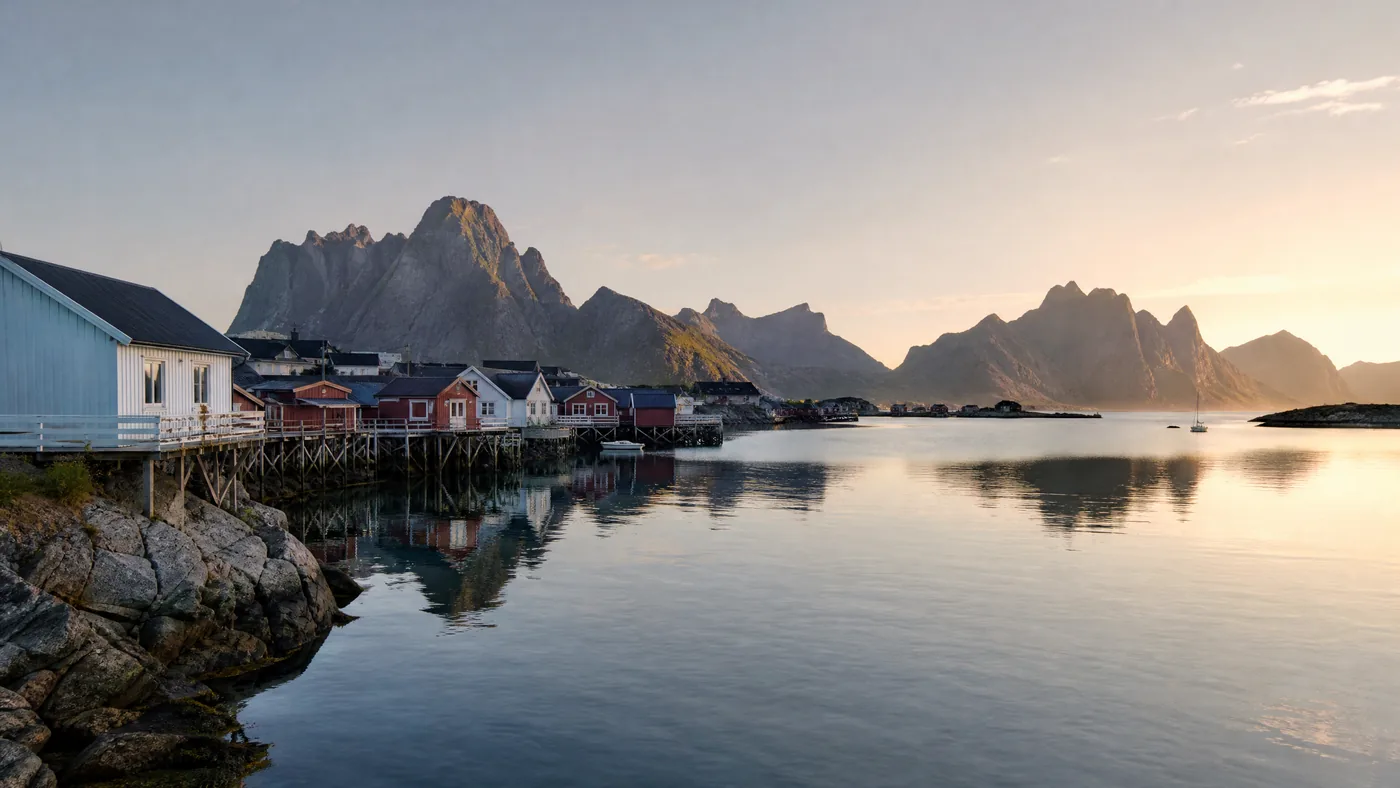
Booking choice: The day tour to Å, from $205 per person. Check dates Tour details
Lofoten in winter is milder than its latitude suggests. 68north puts winter lows at about minus 10°C, and the temperature often hovers around freezing. That sounds easy, and it is the tricky part: around zero, snow turns to slush and slush turns to ice.
The advice below comes from Statens vegvesen (the Norwegian Public Roads Administration), Visit Lofoten, 68north and Guide to Lofoten, read on 19 November 2026.
The quick answer
Winter driving in Lofoten is doable with care, studded tyres and a flexible plan. The E10 is the only road through the islands, roads are plowed but often left with packed snow and ice, wind can close the Gimsøy bridge, and the sun does not rise from about 9 December to 4 January. Studded tyres are allowed in Nordland from 16 October to 30 April, and 68north says they come as standard on winter rental cars. If you would rather look at the view than the ice, a guided day to Å from Svolvær or Leknes puts a local driver at the wheel.
Is it hard to drive in Lofoten in winter?
Not for a careful driver with studded tyres, though it is slower and more tiring than in summer.
The E10 runs the length of Lofoten, from the bridges in the east to Å at the end of the road. Visit Lofoten points out that it is the only road linking the islands. When it is icy, or a bridge closes in a storm, there is no quick detour. Svolvær to Reine is about 125 km and about 2 hours in good conditions. In winter, add time.
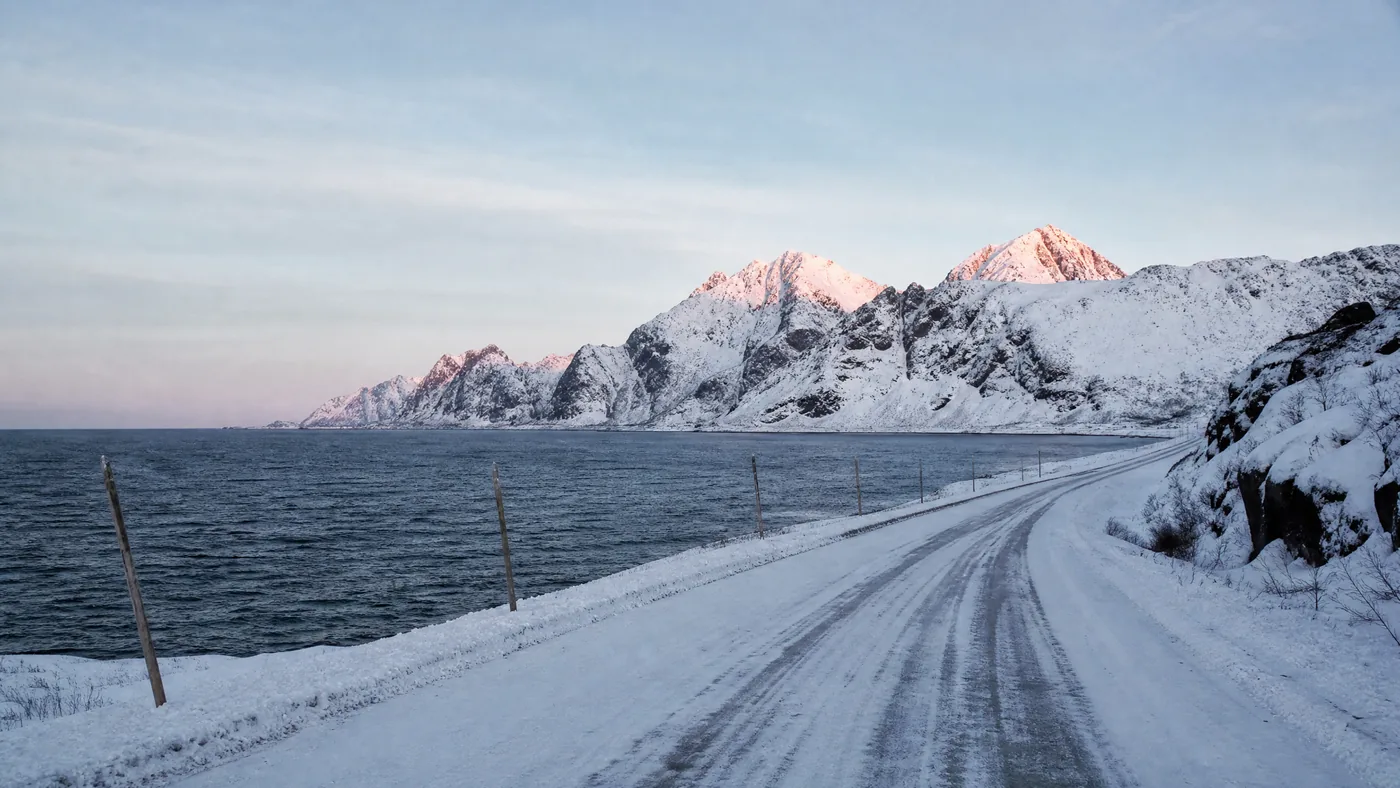
The main road is plowed, but not down to bare tarmac. Guide to Lofoten notes that crews spread gravel rather than salt, so a layer of packed snow or ice often stays. In western Lofoten there is often no shoulder at all, only the road, a line of snow poles and a ditch hidden under the snow. Some bridges are single-lane with traffic lights, including the steep ones at Hamnøy and Sakrisøy.
68north's warning surprised us: the worst moment is not the deep cold but the thaw. When rain falls on a frozen road, even studs struggle, more so in strong wind. A mild, wet day in January can be harder than a crisp one at minus 8°C.
| Challenge | What happens | What to do |
|---|---|---|
| Ice under snow | Roads are plowed and gritted with gravel, not cleared to tarmac | Studded tyres, slow speed, double the gap |
| Rain on ice | Thaw after cold is the slipperiest moment, says 68north | Treat a mild, wet day as the hardest one |
| Wind | The Gimsøy bridge closes automatically in winds above about 25 m/s | Check the forecast before you leave |
| Short days | Polar night from about 9 December to 4 January | Drive around midday, as Visit Lofoten advises |
| Closures | Storms, avalanches or rockfall can shut the E10 for hours or days | Check the 175 road service before you start |
| Ferries | The Bodø to Moskenes crossing is cancelled more often in autumn and winter | Keep a spare day before a flight home |
Do rental cars in Lofoten have studded tyres in winter?
Usually yes. Studded tyres are legal in Nordland from 16 October to 30 April, and 68north says they are standard on winter rentals.
Norway has no single date when winter tyres become compulsory. The rule from Statens vegvesen is that the driver must have enough grip for the conditions, with winter tyres, chains or similar whenever the road needs them. In Nordland, Troms and Finnmark, studded tyres are allowed from 16 October to 30 April and must be fitted on all wheels. Winter tyres need at least 3 mm of tread in the same period.
68north, which is based on the islands, says studded tyres come as standard on rental cars in winter at no extra cost, and it prefers them to studless tyres because ice, more than snow, is the problem here. Guide to Lofoten gives the same advice in stronger words: check before you book, and pick another agency if the car comes without studs.
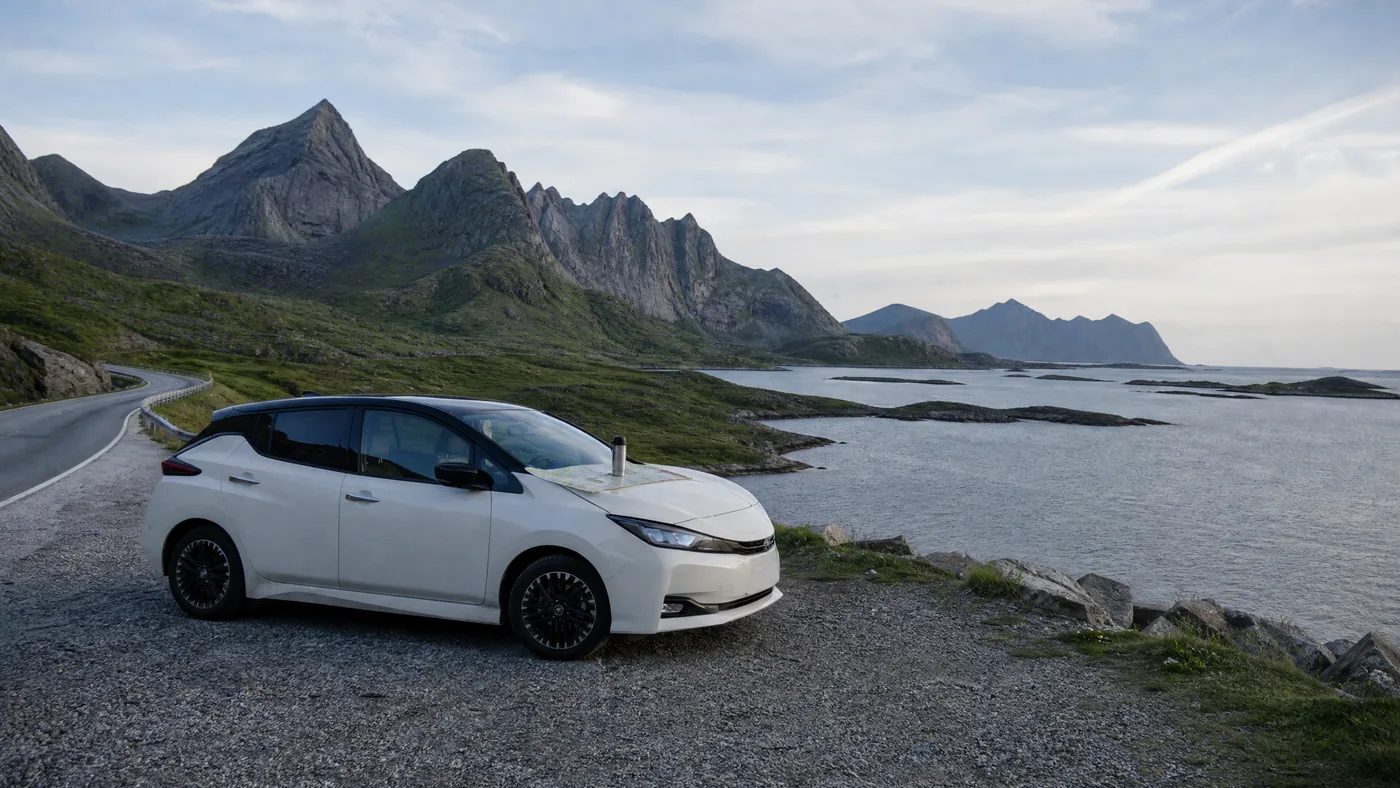
A four-wheel drive is not needed. Both sources agree it does nothing for braking on ice. Light little city cars can feel nervous in a snowstorm, so a mid-size car is a fair choice if the price is close.
| Rule | What Statens vegvesen says | In practice |
|---|---|---|
| Studded tyres | Allowed from 16 October to 30 April in Nordland, on all four wheels | Standard on winter rental cars, per 68north |
| Tread depth | At least 3 mm on winter tyres in the same period | Ask the rental desk if in doubt |
| Studless winter tyres | Allowed all year | Less grip than studs on wet ice |
| Grip rule | The driver must have enough grip for the conditions at all times | Chains or similar if the road needs them |
How much daylight is there for driving in Lofoten in winter?
Very little in December. The sun does not rise from about 9 December to 4 January, then the days grow fast.
On 19 November the sun is up in Svolvær for a little over four hours. By early December it barely clears the mountains, and then the polar night begins. Wikivoyage gives 9 December to 4 January for Lofoten; 68north gives 7 December to 5 January for Svolvær, because the exact dates shift a little with place. It is not pitch dark at noon. There are a few hours of deep blue twilight, and on clear days the southern sky glows orange.
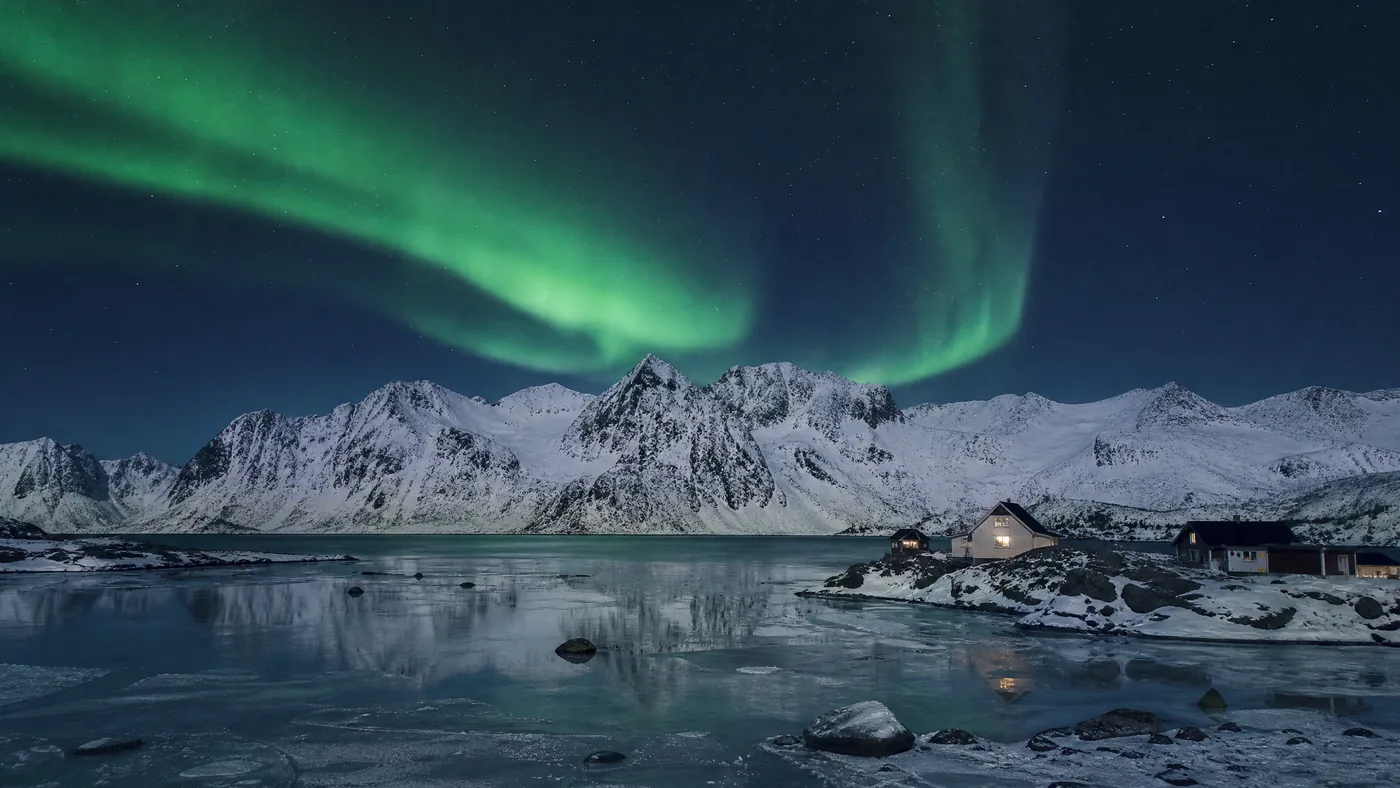
Visit Lofoten's advice is to plan your driving around midday in December and January. We agree. Do the long drive west in the light, and keep the evenings for short trips or a northern lights chase. By 1 February there are almost six hours of daylight, and by 1 March nearly ten. Late February and March are the easiest winter weeks on the road.
Driving in the dark is common here and safe with care: slower speeds, dipped lights near other cars, and an eye out for people walking on the road. 68north notes that locals wear hi-vis vests in winter, and that many visitors dressed in black are hard to see. Rental cars often include one, per 68north.
| Date (Svolvær) | Daylight, approximate | What it feels like |
|---|---|---|
| 19 November | About 4 hours 20 minutes | Late sunrise, early dusk |
| Early December to early January | No sunrise (polar night) | A few hours of blue twilight around midday |
| 20 January | About 4 hours | The light comes back fast |
| 1 February | About 5 hours 45 minutes | Skrei season begins |
| 1 March | About 9 hours 45 minutes | Days feel normal again |
| 1 April | About 13 hours 50 minutes | Light evenings return |
Do roads and ferries close in Lofoten in winter?
Sometimes. Storms, avalanches and rockfall can close parts of the E10, and winter ferry cancellations are more common.
Most days the road is open. When it is not, the cause is usually wind, snow or a slide. 68north notes that the Gimsøy bridge closes automatically in winds above about 25 m/s, and that big storms can cut the E10 in several places at once. In February 2022 it took two days before people could travel from Moskenes and Flakstad to Leknes again.
Check the road before you start. Statens vegvesen runs the 175 road traffic service, with a traffic map on its website and in its app. The map is in Norwegian, but clicking a road shows any closure. For weather, the Norwegian Meteorological Institute issues yellow, orange and red warnings, shown on Yr. Guide to Lofoten's rule of thumb: on an orange warning, stay off the road unless you must.
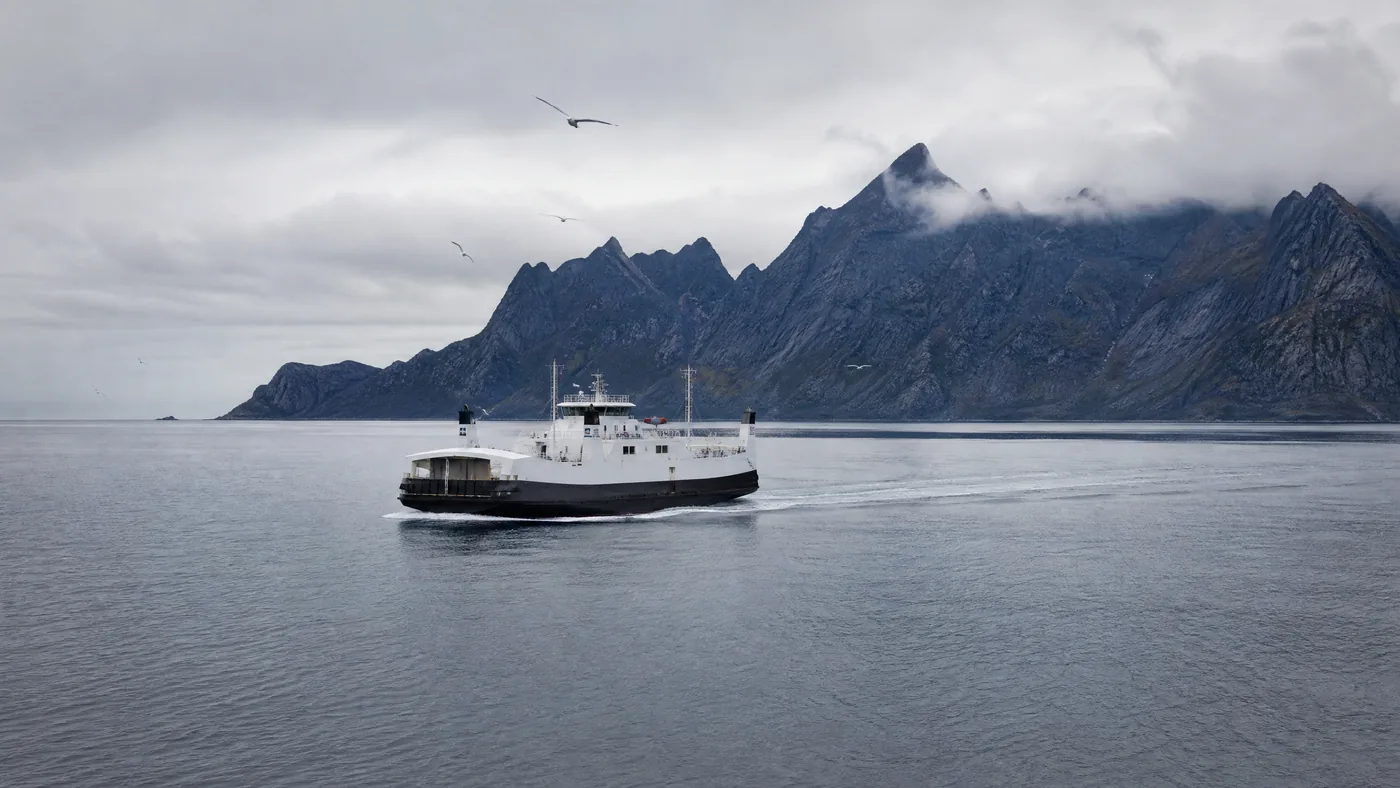
Ferries matter if you came by sea. The Bodø to Moskenes car ferry runs all year but is cancelled more often in autumn and winter. Visit Lofoten's advice fits both road and sea: build slack into your plan, and leave a spare day before a flight home. For routes in and out, see our guide to getting to Lofoten.
A full day west to Å, Reine, Hamnøy and Sakrisøy in a small minivan, with a local guide at the wheel.
Check dates for the day tour to ÅWhere can you stop and park on the E10 in winter?
Only in lay-bys and proper parking areas. Never on the E10 itself, and never at a passing place.
This is the rule visitors break most, and Visit Lofoten is clear about it: stop only in lay-bys, never on the E10. 68north explains why. Parking on the road is illegal where the speed limit is over 50 km/h, which covers nearly all of the E10, and the blue M signs mark passing places, which must stay clear. A car stopped on an icy bend for a photo puts everyone at risk.
Snow makes the safe spots harder to find. Just beyond the snow poles there is usually a ditch, and fresh snow hides it. Visit Lofoten also asks drivers to stay off unplowed side roads, where a car can sink in quickly. If a line of cars builds up behind you, pull in at the next safe spot and let it pass.
The famous viewpoints, such as the Hamnøy bridge and the yellow cabins at Sakrisøy, have limited space even in summer. In winter, with snowbanks, there is less. Please respect the Lofoten Code here: the rorbuer and fish racks are homes and workplaces, not photo props.
Is a guided day tour easier than driving in Lofoten in winter?
For many visitors, yes. A local driver handles the ice, the parking and the timing, and you watch the view.
The day tour to Å is a good winter answer. It runs about 9 hours with pickup in Svolvær or Leknes, in nine-seat minivans with a local guide who is also a certified driver. The company is based in Reine, and its guides live along the route, from Reine and Fredvang to Gimsøy and Svolvær. They track conditions closely in winter and cancel only for genuinely dangerous driving, bridge closures or bad visibility.
The listing is honest about the distance: about 2.5 hours each way between Svolvær and Å in good conditions. The order of stops is flexible, built around the light, the plowing and the parking. Expect photo stops at the Hamnøy bridge, Sakrisøy, Reine and Å, and maybe Ramberg beach, Skagsanden or the Fredvang bridges if conditions allow. Parking costs are included; lunch is not, with mains around €25 at the usual stops. Children under 12 cannot join.
Short of time? The photo tour to Reine, Hamnøy and Sakrisøy covers the western villages in 7 hours from Svolvær. Both tours have free cancellation up to 24 hours before, so you can book the day to Å now and keep your plans loose.
| Rental car | Guided day to Å | |
|---|---|---|
| Who drives | You, on ice and in the dark | A local driver certified for passenger transport |
| Road checks | You read the 175 service and the forecast | Guides who live along the route track conditions |
| Parking at viewpoints | Hard to find in snow; never on the E10 | Parking costs on the route included |
| Length | About 2.5 hours each way to Å, more on ice | About 9 hours, door to door |
| Price | Car hire, fuel and parking | From $205 per person |
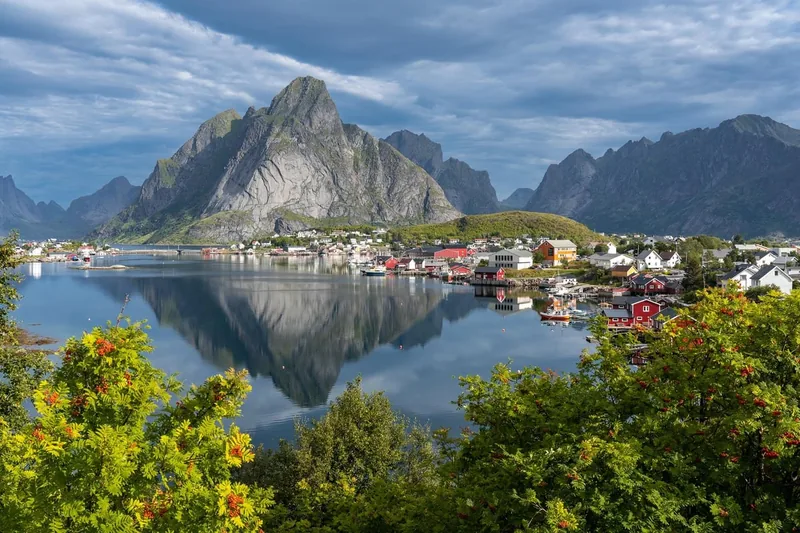
Leave the ice to a local driver: a full day west to Å, Reine, Hamnøy and Sakrisøy from Svolvær or Leknes, parking included.
Explore the day tour to Å Tour detailsFrequently asked questions
Do I need studded tyres to drive in Lofoten in winter?
They are not compulsory, but strongly advised. Statens vegvesen allows them in Nordland from 16 October to 30 April, and 68north says winter rental cars come with them as standard.
Is the E10 in Lofoten open in winter?
Yes, most days. Storms, avalanches or rockfall can close parts of it, and the Gimsøy bridge closes in very strong wind. Check the 175 road service before you go.
How many hours of daylight are there in Lofoten in winter?
About four hours in mid November and none during the polar night, roughly 9 December to 4 January. By early March there are nearly ten hours.
Can I see western Lofoten in winter without driving?
Yes. The day tour to Å picks up in Svolvær or Leknes, and the photo tour to Reine starts in Svolvær, both with a local driver.
Ready to book
Choose your tour
Free cancellation up to 24 hours before on every option. Prices are from-prices in USD and move with the season.
Lofoten Day Tour to Å, Reine, Hamnøy & Sakrisøy
The long day: all the way to Å at the end of the road, small minivan group
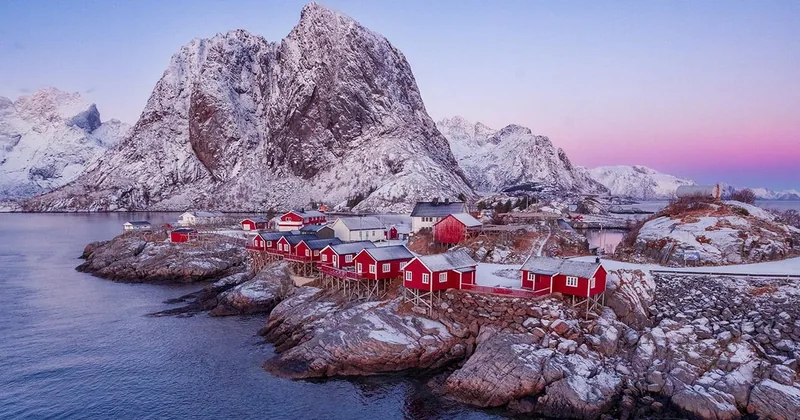
Reine, Hamnøy & Sakrisøy Photo Tour from Svolvær
- Professional local photographer guide
- Small group in a comfortable vehicle
- Stops at Ramberg, Reine, Sakrisøy and Hamnøy
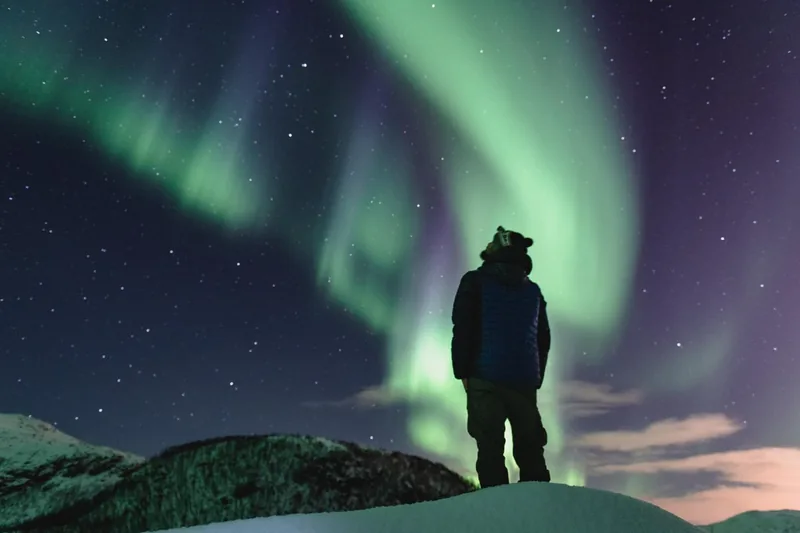
Northern Lights Tour from Svolvær
An aurora chase with a photographer, hot drinks and your photos