Booking choice: The northern lights tour from Svolvær, from $153 per person. Check dates Tour details
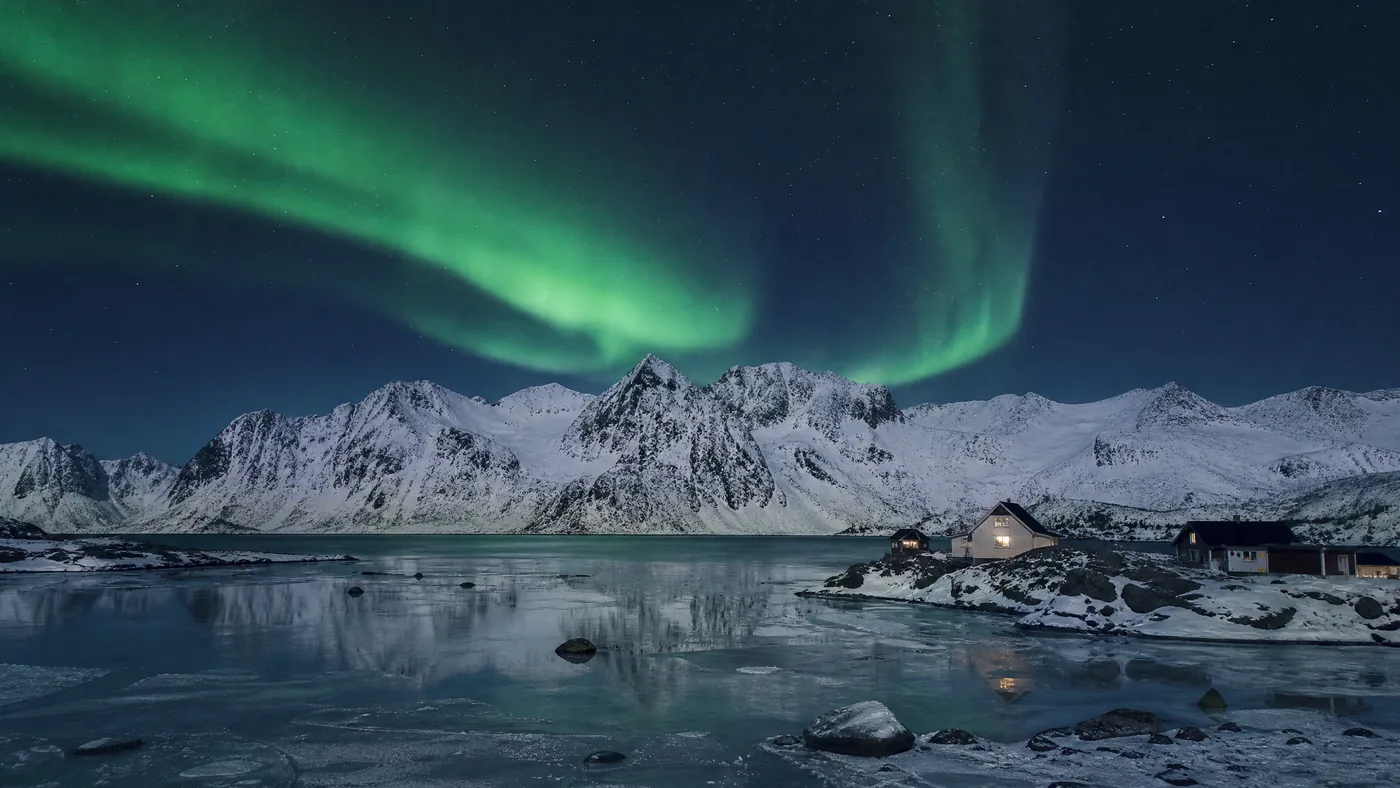
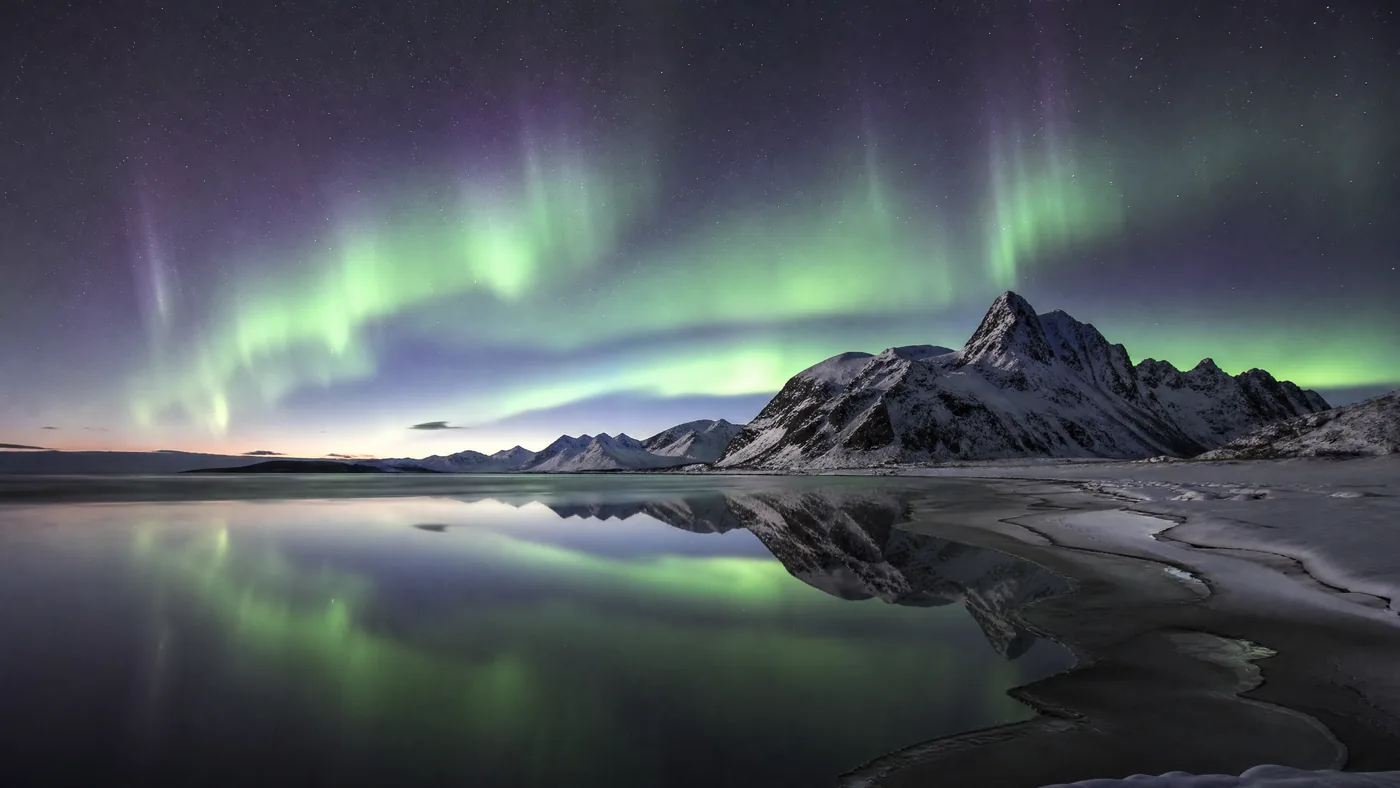
Lofoten sits under the auroral oval, the ring around the pole where the northern lights are most common. Visit Lofoten says the lights often show when the sky is clear, and that is the whole game here: darkness, a clear patch and a bit of solar wind.
The figures below come from Visit Norway, Visit Lofoten, the photography site 68north, solar physicist Ryan French writing on Space.com and the UK Met Office space weather blog, all read on 19 November 2026.
The quick answer
The Lofoten aurora season runs from late August to early April, with the main months from September to March. The sun passed the peak of Solar Cycle 25 very likely in October 2024, but strong storms often come in the years after a peak, so this winter still looks good. Clouds decide more than the sun does: watch the cloud forecast, stay flexible and be ready to drive to the clear side of the islands. A guided chase from Svolvær does that driving for you, with a photographer who sends you the pictures.
Is 2026 to 2027 a good season to see the northern lights in Lofoten?
Yes. The solar peak has passed, but the declining phase often brings some of the biggest storms of a cycle.
The sun runs on a cycle of about 11 years. Ryan French, a solar physicist writing on Space.com, puts the maximum of Solar Cycle 25 very likely in October 2024 and expects the decline to carry on through 2026. Fewer sunspots, fewer flares. That sounds like bad news, and it is not.
History is on our side. The famous Halloween storms of 2003 hit about two years after the 2001 peak. The two largest flares of the last cycle came in September 2017, more than three years after its peak. And 2025 still produced a severe storm on 11 November, the third strongest of this cycle so far.
The UK Met Office made the same point in its space weather blog in September 2026: big events can happen in the declining phase. It adds a detail that matters up here. As the cycle winds down, coronal holes on the sun grow larger and live longer, and their fast solar wind can trigger storms. Those storms are milder than the big eruptions, but at Lofoten's latitude a mild storm is often all you need.
Short version: do not wait for the next peak. That is about a decade away, and Lofoten does not need a record storm to light up.
A northern lights chase from Svolvær with a photographer guide, hot drinks, food and your photos sent after the tour.
Check dates for the northern lights tour from SvolværWhat month is best for northern lights in Lofoten?
September to March. Autumn and March bring the most activity; December and January bring the longest nights.
Visit Norway gives the season as late August to late March and says the statistics favor spring and autumn: September and October, then March and April, show the highest aurora activity. The pattern follows the equinoxes. 68north, a photography site run from the islands, stretches the season from late August to mid April and calls September to March the main window.
Each month feels different. September gives you aurora over green hills and mild nights, with no snow on the beaches. December is the polar night, roughly 9 December to 4 January, when the sun never rises and the dark lasts most of the day. From mid January to late March, 68north's pick for photos, you get snow on the peaks and enough daylight to enjoy the villages between nights out.
Our tip for a first trip: late February or March. The days are long enough for the photo tour to Reine or the Trollfjord, the nights are still fully dark, and skrei cod hang on the drying racks. For the rest of the year, see our guide to the best time to visit Lofoten.
| Month | Darkness | Aurora | Also good to know |
|---|---|---|---|
| Late August and September | Dark nights return after the summer | The first auroras of the season; Visit Norway counts autumn among the most active times | Mild air, no snow on the beaches, green and gold hills |
| October | Long nights, days still useful | Statistically one of the strongest months | Snow returns to the peaks in late September or early October |
| November | About 4 hours of sun by the middle of the month | Good dark hours; weather is the wild card | Wind and rain on the coast, ice on the roads |
| December | Polar night from about 9 December | The longest dark hours of the year | Blue midday twilight instead of sunrise |
| January | The sun returns in early January | Long nights continue | From mid January, snowy peaks and returning light suit photos |
| February | About 6 hours of daylight at the start of the month | Strong season, often with snow | Skrei season, fish on the drying racks |
| March | About 10 hours of daylight at the start of the month | Visit Norway names March among the most active months | Longer days for sightseeing |
| April | Nights get light fast | The last chances, early in the month | The season closes by late April |
What are the chances of clear skies for the aurora in Lofoten?
Hard to predict more than a day or two ahead. Coastal weather changes fast, and you need to move with it.
This is the honest part. Lofoten sits in the open Norwegian Sea, and the weather comes and goes in hours. 68north notes that some winters bring two weeks with hardly a star, and then a run of clear nights. Nobody can give you a reliable monthly percentage for clear skies here, so plan for flexibility instead.
Three things help. Stay at least three or four nights, because one cloudy night then means little. Watch the cloud forecast on Yr, the forecast service of the Norwegian Meteorological Institute, rather than the aurora apps alone. And be mobile: when the south side is socked in, the north side, or the next island west, is sometimes clear.
That last point is where a guide earns the fee. Visit Lofoten says it plainly: a guided tour improves your odds, because guides chase the clear patches and know when strong displays are likely. They also do the night driving on icy roads, which is half the stress gone.
How does a northern lights tour in Lofoten choose where to go?
On the night, from the cloud and aurora forecasts. The guide picks open, dark spots with a clear view to the north.
Our northern lights tour from Svolvær picks you up at one of five points in town: Torget, Scandic Svolvær, Thon Hotel Svolvær, Svinøya and Thon Hotel Lofoten. It lasts about 5 hours. The listing names up to three photo stops of about an hour each and says plainly that the plan changes with the conditions. That is the point of the tour.
Your guide is a photographer. You get hands-on camera tips, a talk on the science of the aurora, warm drinks and food, and a bonfire if the weather allows. No camera? No problem: the guide shoots you under the lights and sends the photos by link within 72 hours, usually sooner. The tour costs $153 per person and holds 4.8 stars from 52 reviews.
Two things worth knowing before you book. Nobody can promise the aurora, and the listing does not pretend to. If the weather forces a cancellation, you get a full refund, and free cancellation runs up to 24 hours before. Book it early in your stay, so a cancelled night can move to another date.
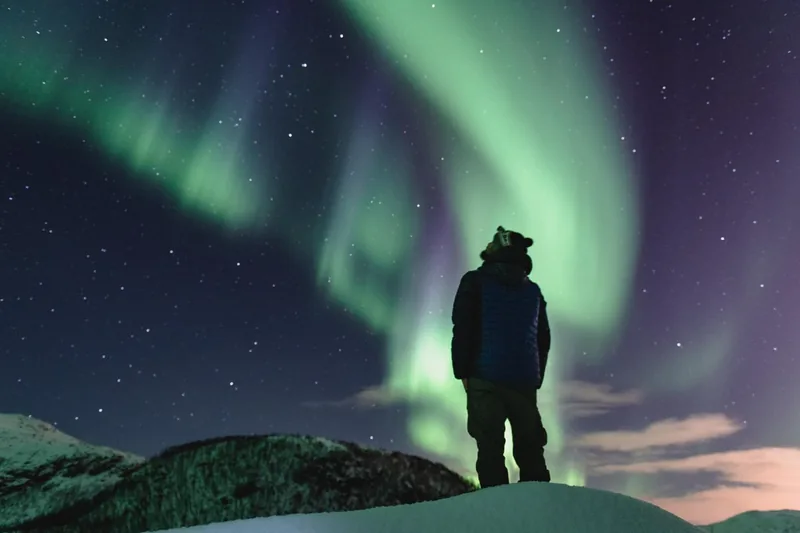
Chase the northern lights from Svolvær with a photographer guide: clear-sky spots chosen on the night, hot drinks, food and your photos.
Explore the northern lights tour from Svolvær Tour detailsWhere are the best places to watch the northern lights in Lofoten?
North-facing beaches and shores away from village lights: Uttakleiv, Skagsanden and the north coast of Vestvågøy.
The aurora usually sits in the northern half of the sky, so you want an open view to the north and dark ground around you. 68north's notes are useful. Skagsanden near Flakstad faces northwest. Uttakleiv is open from northwest to north, though the mountains block the lights low in the east. Haukland faces southwest, so it works best when the lights are overhead or swing south.
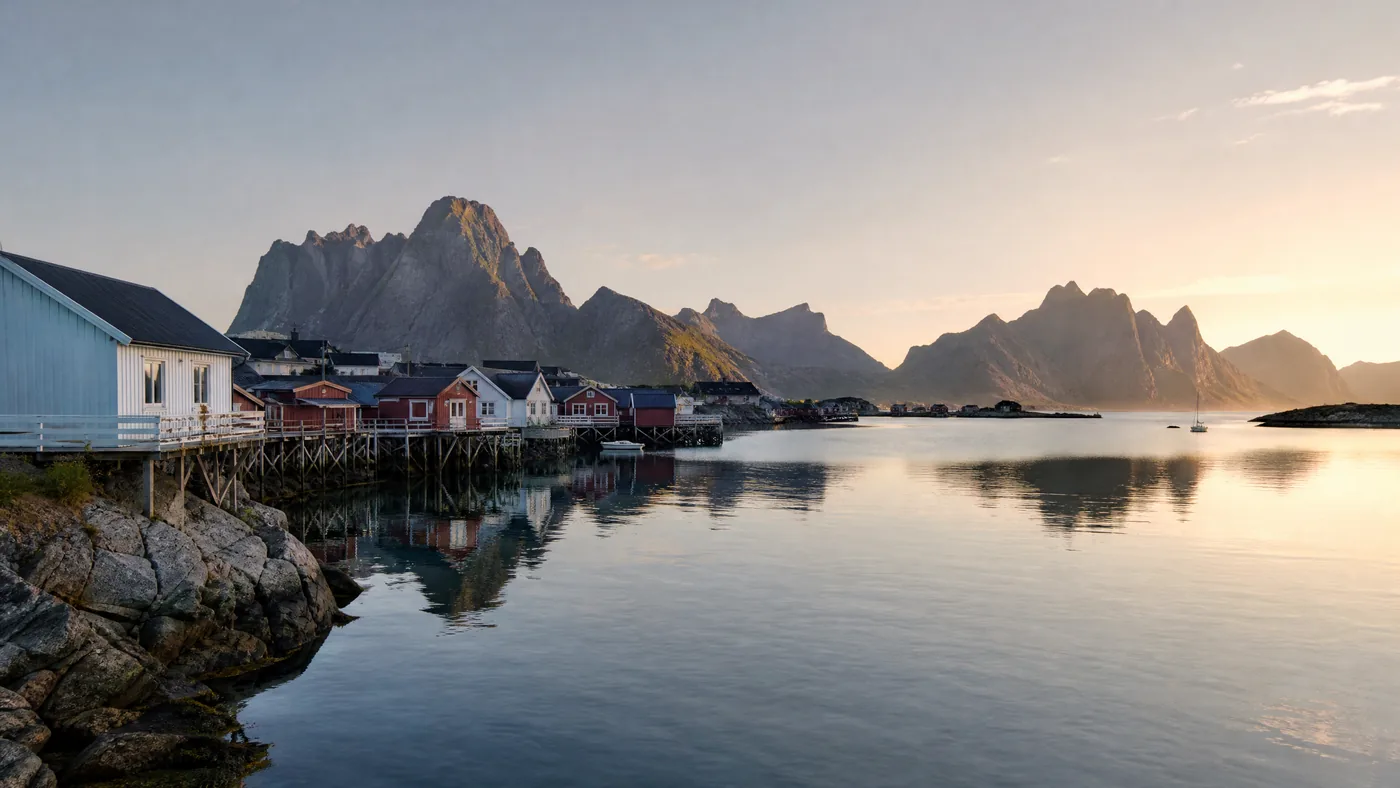
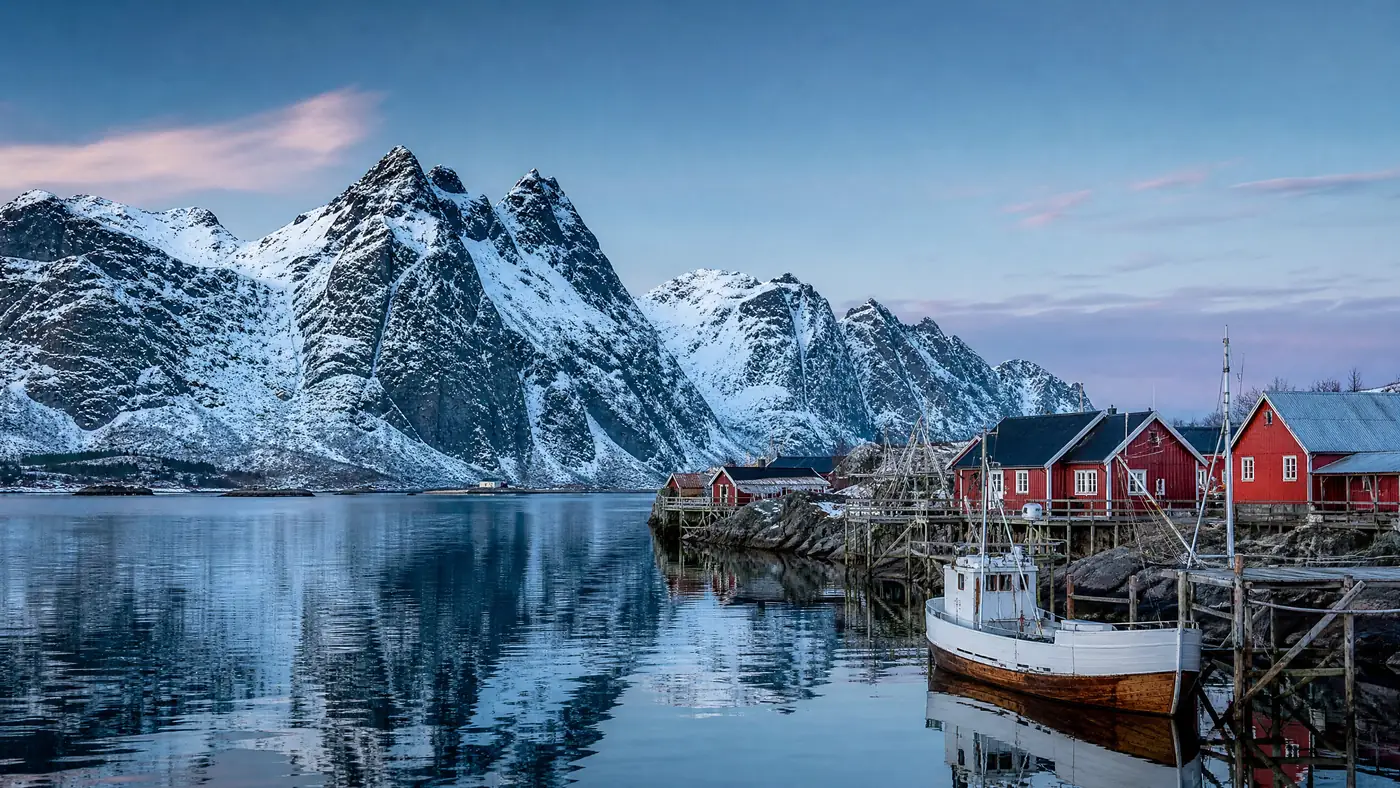
Reine and Hamnøy are the postcard, with red cabins under steep peaks. They are also busy, and the mountains that make them so pretty can block a low aurora. If you go, park only where parking is allowed and keep your torch off the cabins. Visit Lofoten's Lofoten Code asks visitors to respect private property, and that includes rorbuer and fish racks at night.
On timing, Visit Norway says the peak is often between 23:00 and 02:00. 68north sees most displays start after 20:00 or 21:00, and finds that if nothing has shown by midnight it probably will not. Dress for standing still: wool, a down jacket, a hat, gloves and warm boots, which is also the tour's packing list.
How do you photograph the northern lights in Lofoten?
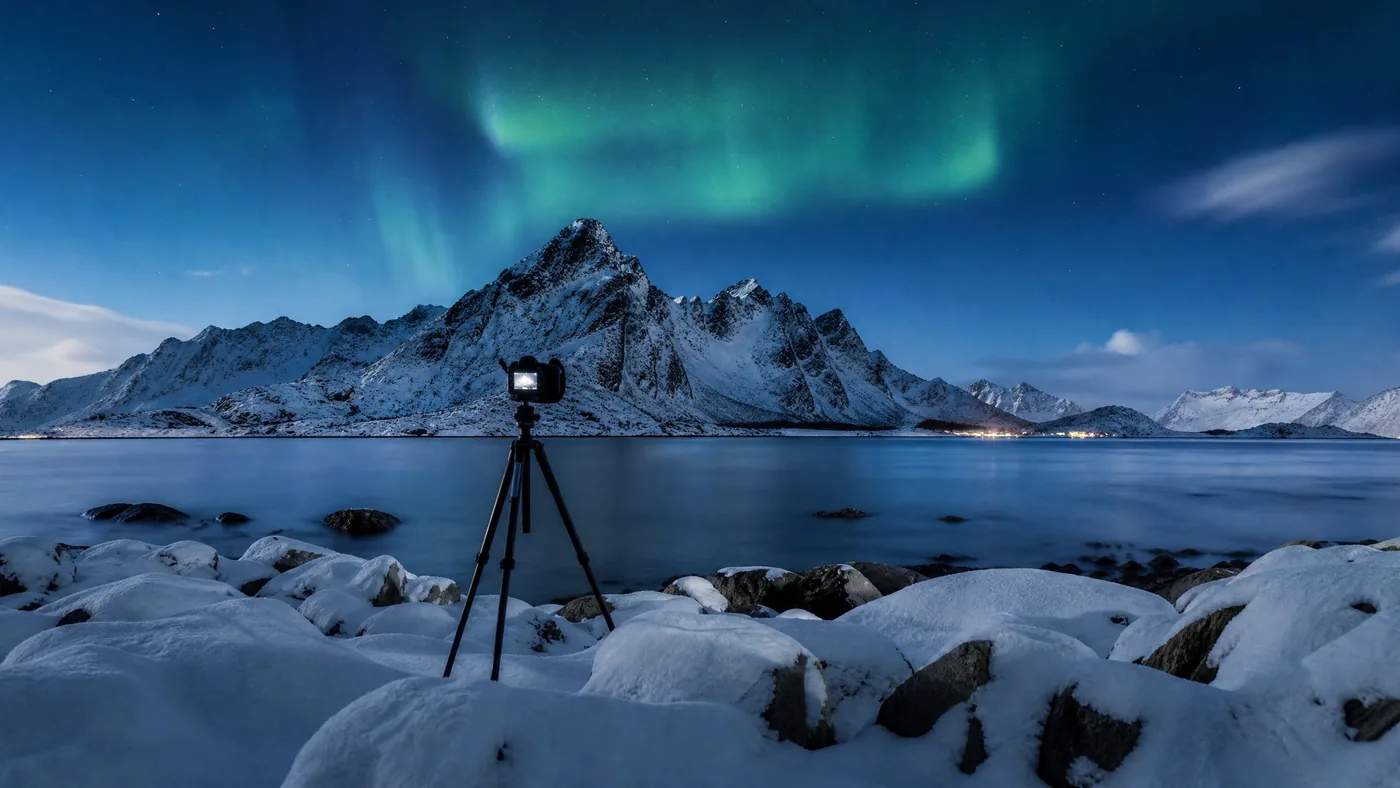
Use manual mode on a tripod, start around ISO 2000 at f/2.8 for 8 seconds, then adjust.
68north's starting point is ISO 2000, f/2.8 and 8 seconds. When the aurora surges and starts to dance, shorten the exposure to a second or two so the shapes stay sharp. Check the histogram, not the screen: in the dark the screen looks brighter than the file.
Focus is where most night photos fail. Focus on the moon, a distant light or a bright star, switch the lens to manual and leave it alone. Moonlight is a friend, by the way. On snow it lights the mountains and beach, and the aurora still shows above them.
Phones do better than you might think. Use night mode and rest the phone on something solid. Keep spare batteries in an inside pocket, because the cold empties them fast. Or let the guide on the northern lights tour handle the settings and simply look up.
| What | How | Tip |
|---|---|---|
| Camera mode | Manual, with RAW files if your camera has them | Auto modes fight the dark |
| Starting settings | ISO 2000, f/2.8, 8 seconds (68north's starting point) | Shorter exposures when the lights move fast |
| Focus | On the moon, a distant light or a bright star, then switch to manual | Tape the ring so it cannot slip |
| Support | A tripod, or a rock and a rolled-up glove | Use the self-timer to avoid shake |
| Phone | Night mode, phone resting on something solid | Many recent phones catch the green better than the eye |
| Batteries | Two spares, kept in an inside pocket | Cold drains them quickly |
Frequently asked questions
Is 2026 a good year to see the northern lights in Lofoten?
Yes. The solar maximum very likely passed in October 2024, but strong storms often come in the declining phase, and Lofoten sits under the auroral oval, so even modest activity can show.
What month is best for northern lights in Lofoten?
September to March. Visit Norway says September, October and March are among the most active months, while December and January give the longest nights.
Are the northern lights guaranteed on a Lofoten tour?
No. The aurora depends on the sun and a clear sky. The northern lights tour from Svolvær gives a full refund if the weather forces a cancellation.
What time of night are the northern lights strongest in Lofoten?
Visit Norway says the peak is often between 23:00 and 02:00. Displays in Lofoten usually start after 20:00 or 21:00.
Ready to book
Choose your tour
Free cancellation up to 24 hours before on every option. Prices are from-prices in USD and move with the season.
Northern Lights Tour from Svolvær
An aurora chase with a photographer, hot drinks and your photos
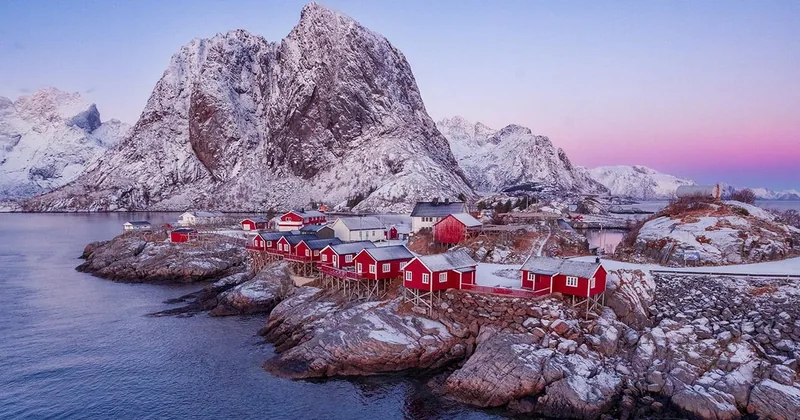
Reine, Hamnøy & Sakrisøy Photo Tour from Svolvær
- Professional local photographer guide
- Small group in a comfortable vehicle
- Stops at Ramberg, Reine, Sakrisøy and Hamnøy
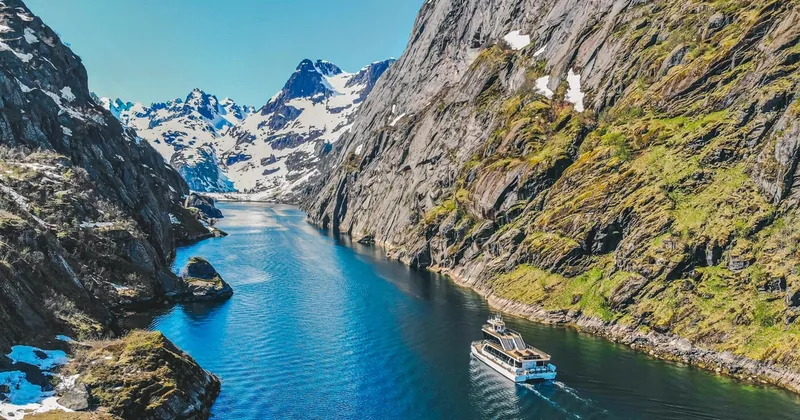
Silent Trollfjord Cruise from Svolvær
- Live guide on board
- Warm indoor lounges and open decks
- Trollfjord and sea eagle stops